🚚 Free shipping on orders over $200

Uncategorized

peptide puck size

Why Your Peptide Vial Looks the Same (Even When the MG Is Different)

Why You Can’t Judge a Peptide by the Size of the Puck One of the most common questions in peptide research products is surprisingly simple: “Why does my 30 mg vial look the same as my 10 mg vial of the same compound?” At first glance, this can seem confusing, or even concerning. It’s natural to assume that a higher milligram amount should look like “more” inside the vial. But with lyophilized (freeze-dried) peptides, appearance is not a reliable indicator of quantity. Let’s break down why. You’re Not Looking at “Loose Powder” When you look inside a peptide vial, you’re not […]

Why Your Peptide Vial Looks the Same (Even When the MG Is Different) Read More »

tesamorelin storage myth room temperature

Debunking the Myth That Tesamorelin Needs to Be Stored at Room Temperature

If you’ve spent any real time working with research peptides, you’ve seen this cycle before. A technically correct statement gets clipped, simplified, amplified on social media, and then slowly turns into a universal rule that ignores formulation science, kinetics, and real-world laboratory conditions. That’s exactly what’s happening right now with the claim: “You should never refrigerate Tesamorelin after reconstitution because it will thicken, aggregate, gel, and lose effectiveness.” 🤦‍♂️ Like most viral science takes, this statement is not entirely wrong.It’s just missing the context that makes it scientifically useful. And in chemistry, context is everything. Where This Claim Comes From (And Where It

Debunking the Myth That Tesamorelin Needs to Be Stored at Room Temperature Read More »

buy j-147 for sale

J-147 Research Compound: A Tool for Studying Cellular Stress and Metabolic Signaling

J-147 is a synthetic small-molecule compound used in controlled laboratory research with non-human test subjects and cellular systems. Rather than being framed as a solution or application, it is best understood as a research probe that allows scientists to observe how complex biological systems respond to stress, metabolic shifts, and changes in cellular signaling under standardized experimental conditions. In simple terms, J-147 is used to help researchers watch what happens inside cells and tissues when specific pathways are influenced. At a more technical level, preclinical studies have examined J-147 in relation to metabolic signaling networks, including pathways associated with AMPK activity,

J-147 Research Compound: A Tool for Studying Cellular Stress and Metabolic Signaling Read More »

reta and carbs myth

Debunking the Retatrutide Carbohydrate Myth: Reta does not need Carbs

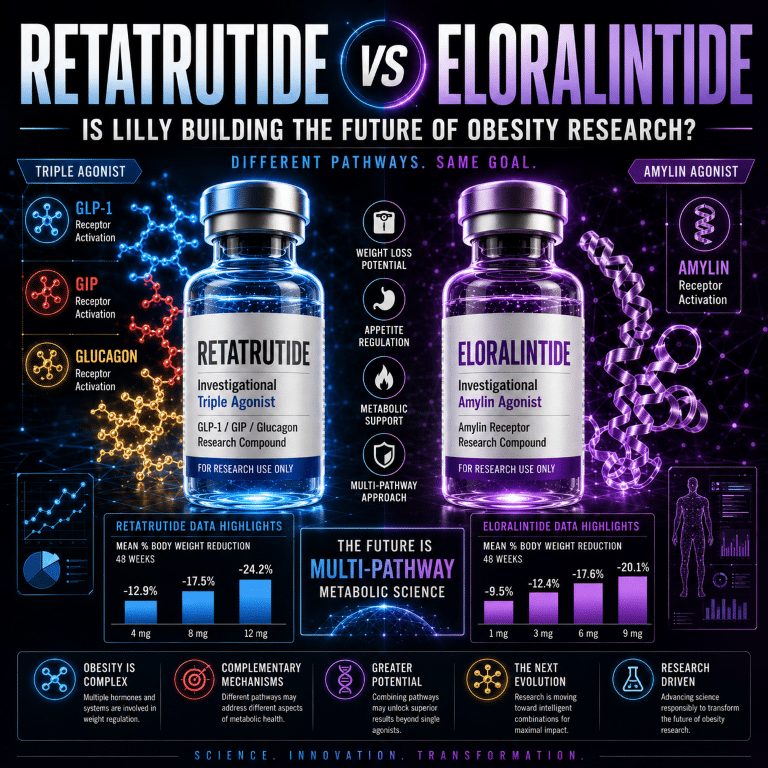
Retatrutide, Carbohydrate Availability, and Research Misinterpretations….Clarifying Recent Claims in Experimental Contexts Welcome back to another round of internet myth-busting. Every few months, a new claim makes the rounds online. It is confidently stated, loudly delivered, and often detached from the underlying data. While most commentary of this type can be ignored, issues arise when misinformation spreads widely enough to disrupt legitimate research discussions. Recently, a familiar source of these myths and comments resurfaced. This same source previously circulated the claim that GHK-Cu and other peptides cannot be mixed, a statement that was addressed and corrected using established handling data and formulation

Debunking the Retatrutide Carbohydrate Myth: Reta does not need Carbs Read More »

mixing GHK-Cu with other peptides

Debunking the Myth That Mixing GHK-Cu With Other Peptides Causes Damage

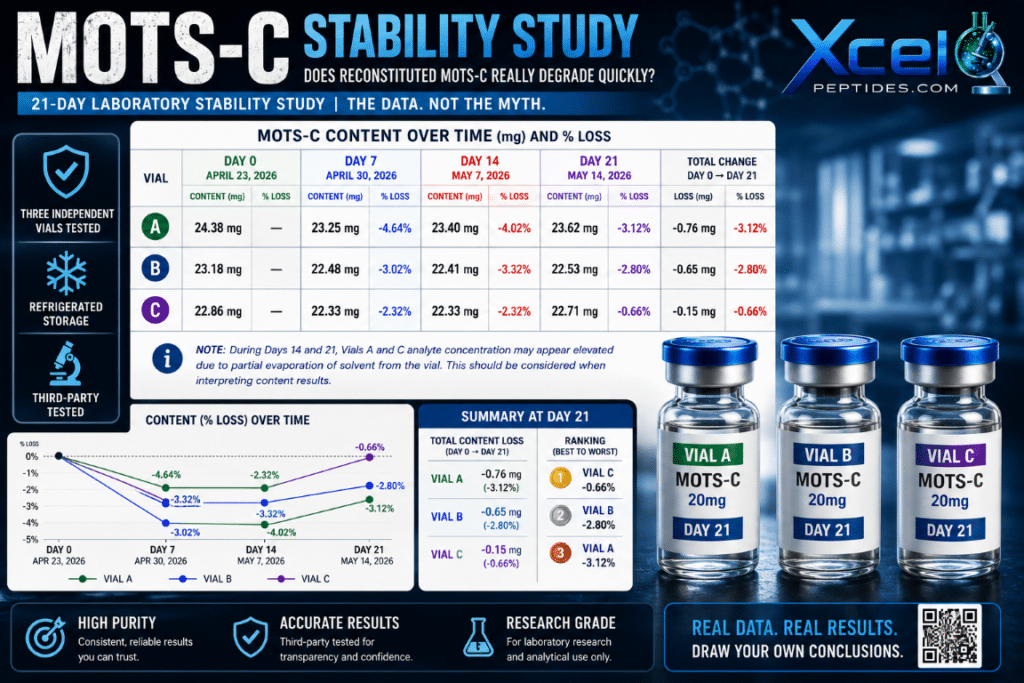
Does GHK-Cu Really Degrade Other Peptides? New 21-Day Lab Data Answers the Question The claim that started the debate In recent weeks, a strong claim has circulated in a particular corner of the internet: that GHK-Cu should never be combined with other peptides. The language used to describe this idea has been dramatic — even theatrical — with comparisons suggesting that mixing GHK-Cu with other compounds is the equivalent of triggering chemical chaos. According to the claim, such combinations would lead to rapid degradation, loss of potency, and instability across the board. It’s the kind of statement that spreads quickly.It’s also the

Debunking the Myth That Mixing GHK-Cu With Other Peptides Causes Damage Read More »

Buy Humanin 10mg peptide

Humanin vs MOTS-c vs SS-31: A Research-Based Peptide Comparison

Humanin Research Peptide Mitochondria-Encoded Peptide Signaling in Laboratory Models Humanin is a short, mitochondria-encoded research peptide that has drawn sustained interest in laboratory investigations centered on intracellular signaling and mitochondrial communication. Unlike most peptides translated from nuclear DNA, Humanin originates from mitochondrial genetic material, placing it within a distinct class of compounds studied to better understand how mitochondria participate in broader cellular signaling networks under defined experimental conditions. Research Background and Mitochondrial Origin Humanin was first identified during studies examining mitochondrial genetic output beyond classical energy production. Its mitochondrial origin has made it a frequent subject of research focused on how

Humanin vs MOTS-c vs SS-31: A Research-Based Peptide Comparison Read More »

Buy Cerebrolysin - Cerebroprotein Hydrolysate peptide

Buy Cerebrolysin – (Cerebroprotein Hydrolysate) Neuro-Peptide Research Compound

Cerebrolysin, also known as Cerebroprotein Hydrolysate, is a peptide-rich research compound widely studied in laboratory environments for its interactions with neural systems, cellular signaling, and adaptive processes in non-human research models. It is composed of low–molecular weight peptides and free amino acids generated through controlled protein hydrolysis, making it a unique tool for studying complex biological communication in experimental systems. What Makes Cerebrolysin Unique in Research Settings Unlike single-pathway compounds, Cerebrolysin functions as a multi-peptide signaling mixture, allowing researchers to explore coordinated biological responses rather than isolated mechanisms. In laboratory-based studies using non-human test subjects, cultured cells, and experimental organisms, this

Buy Cerebrolysin – (Cerebroprotein Hydrolysate) Neuro-Peptide Research Compound Read More »

ATX-304 vs SS-31 vs MOTS-c | Comparative Mitochondrial Research Review

ATX-304 vs SS-31 vs MOTS-c A Comparative Research Review of Mitochondrial Compounds Overview Mitochondrial structure, signaling, and redox balance remain central research targets in cellular biology and medical research. Among the compounds most frequently evaluated in experimental models are SS-31, MOTS-c, and the emerging compound ATX-304. Although often discussed together, these compounds differ substantially in mechanism of action, research scope, and experimental application. This review compares ATX-304 with SS-31 and MOTS-c strictly from a scientific and mechanistic research perspective, without reference to outcome-based or human-use claims. Mitochondrial Research Context In laboratory and preclinical studies, mitochondria are examined for their role in:

ATX-304 vs SS-31 vs MOTS-c | Comparative Mitochondrial Research Review Read More »

peptide storage

The Ultimate Guide to Proper Peptide Storage & Handling

(How to Protect Your Research Materials and Maximize Longevity) Over the past year, many researchers have noticed changes in peptide availability. Regulatory shifts, vendor adjustments, and broader supply-chain dynamics have made some compounds harder to source—or slower to restock—than they once were. As a result, more people are choosing to plan ahead by purchasing peptides in larger quantities or storing them for longer periods of time. When you move from short-term use to long-term planning, proper storage becomes essential. This guide outlines best practices for storing both lyophilized (freeze-dried) and reconstituted (mixed) peptides so they remain stable, reliable, and protected over

The Ultimate Guide to Proper Peptide Storage & Handling Read More »

Eloralintide vs Cagrilintide comparison

Cagrilintide vs Eloralintide: Which Amylin Receptor Agonist Shows Stronger Research Results?

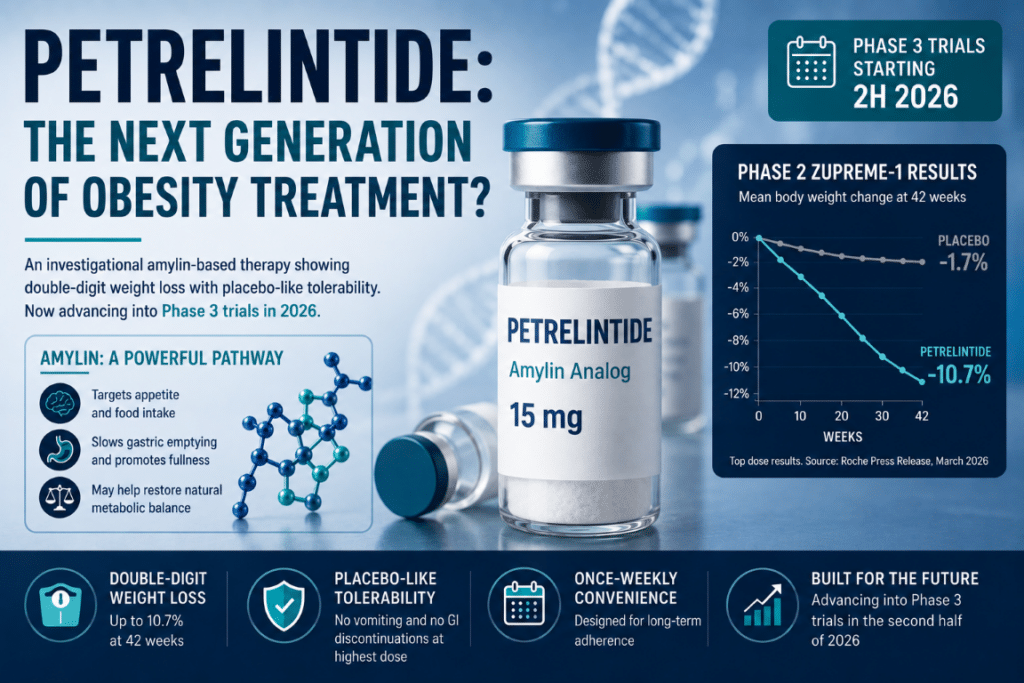
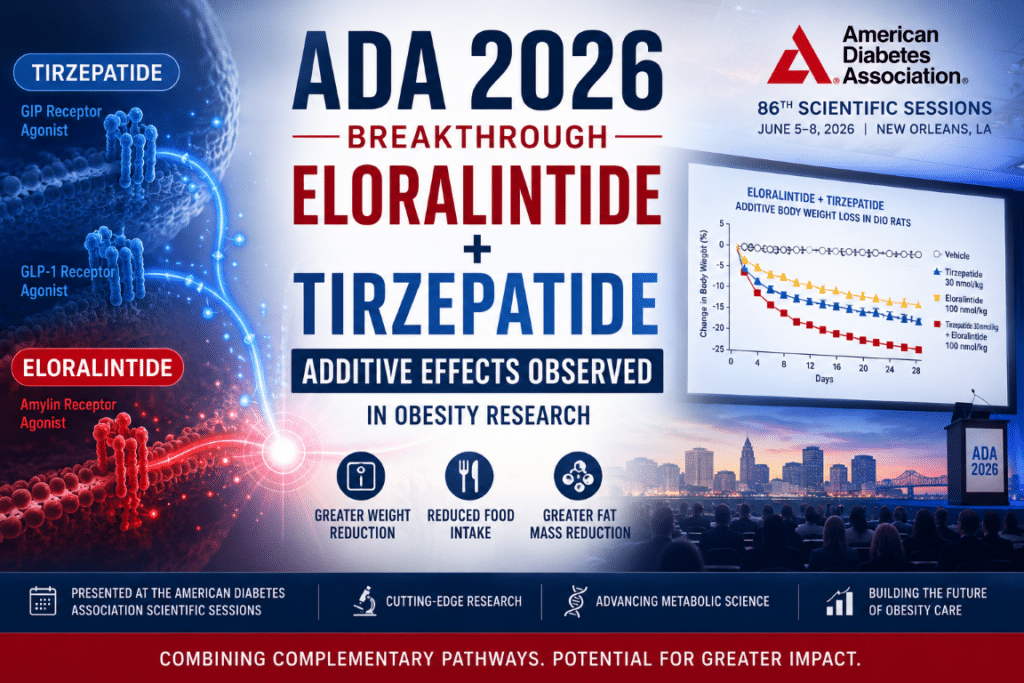
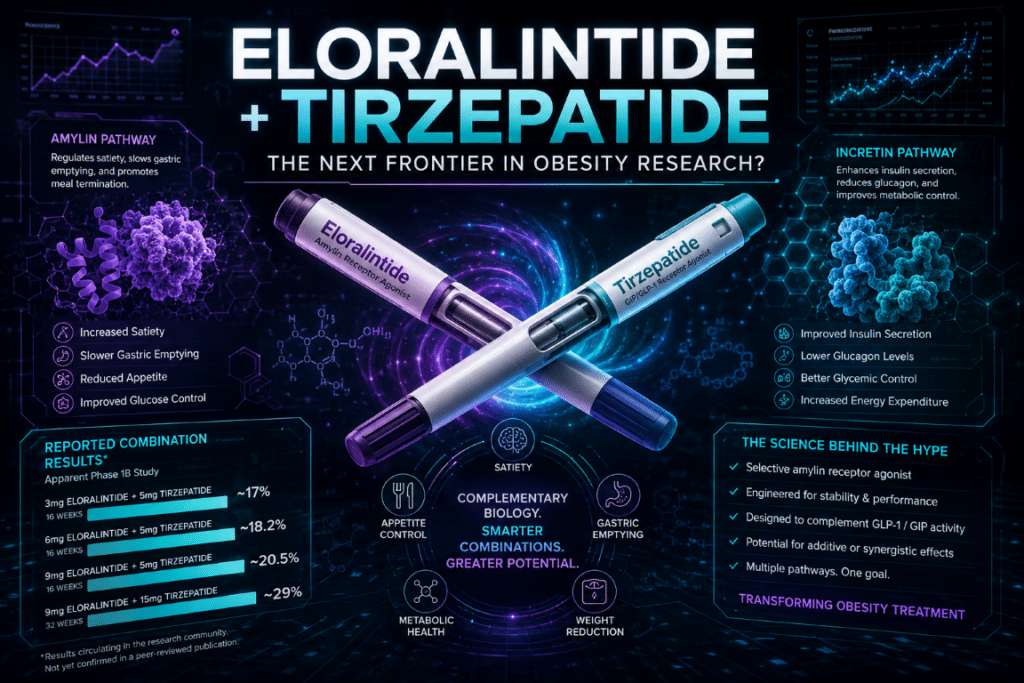
In metabolic and appetite-signaling research, amylin-pathway peptides play a central role in examining satiety control, feeding behavior, and long-term metabolic patterns in test subjects. Two of the most prominent compounds in this class are Eloralintide and Cagrilintide. These long-acting peptides are widely used in research environments due to their stability, strong signaling profiles, and predictable weekly performance. What Is Cagrilintide? Cagrilintide is a long-acting amylin analogue known for activating multiple receptors within the amylin/calcitonin family. It is commonly used to study appetite-regulation mechanisms and satiety-pattern behavior in test subjects. Research Highlights In 26-week controlled studies: High-tier doses produced ~10–11% weight-modulation effects Mid-tier doses

Cagrilintide vs Eloralintide: Which Amylin Receptor Agonist Shows Stronger Research Results? Read More »

Scroll to Top