Five ways a lab report can be accurate and still mislead you
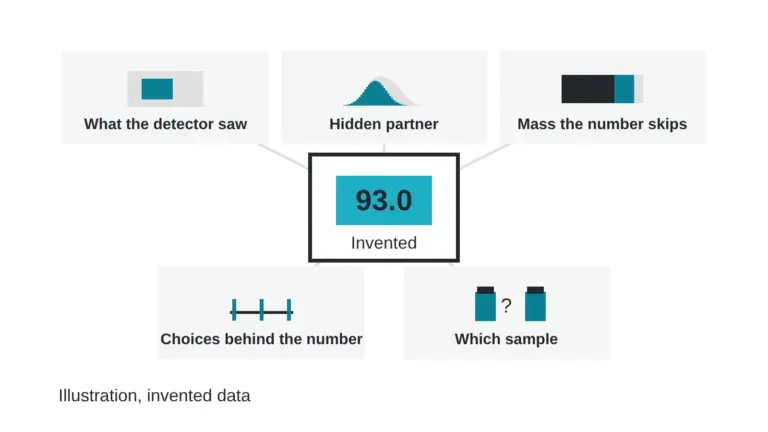
Two labs print the same purity number, and both are telling the truth. Here are five ways an accurate report still leaves you with the wrong picture.
Read articleHow forged lab reports get caught: the checks a careful reader runs
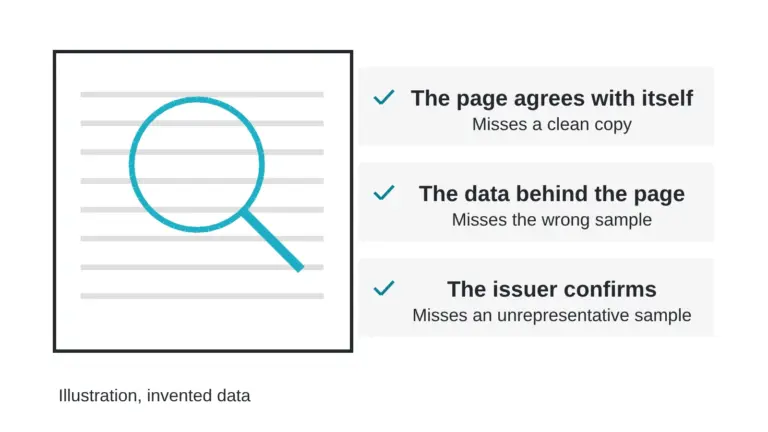
A forged page can copy how a report looks. It cannot copy a laboratory's willingness to answer. Three layers of checks a careful reader runs.
Read articleA “third-party tested” badge tells you less than you think. Here is what to check behind it
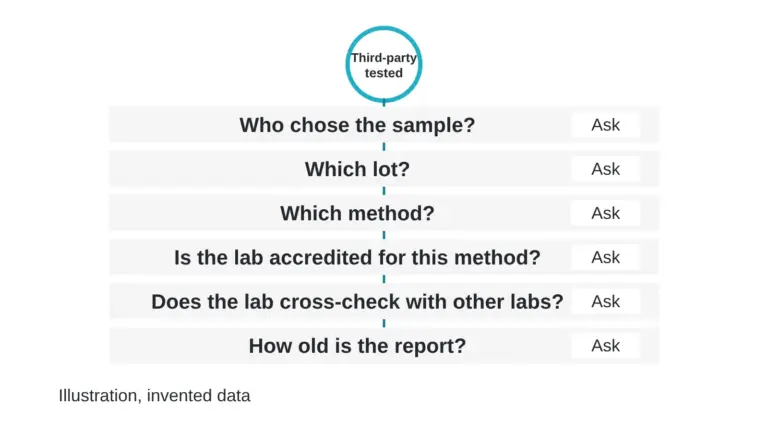
A "third-party tested" badge names who held the instrument. It leaves six questions open. Learn what to check behind the badge before you trust it.
Read articleStop at the big number and you miss the report: how to read a COA
One big number sits on top of a certificate of analysis. The small print decides whether to trust it. Walk through an invented report line by line.
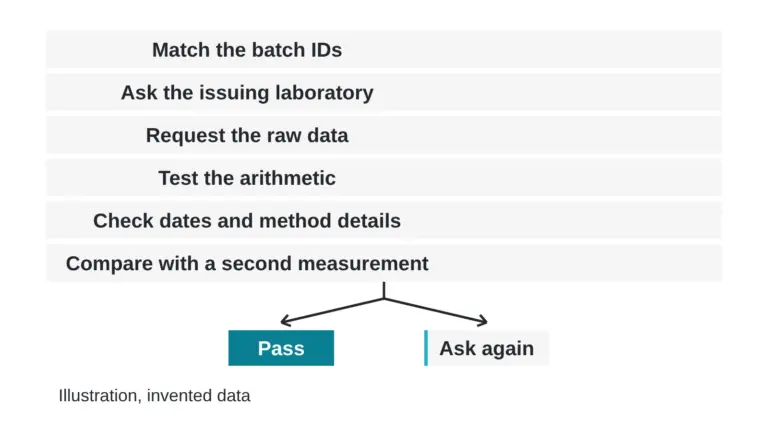
Read articleIs that lab report real? Six checks that take minutes
A logo is free. A real lab report survives six checks: matching IDs, a direct question to the lab, raw files, simple arithmetic and a second opinion.
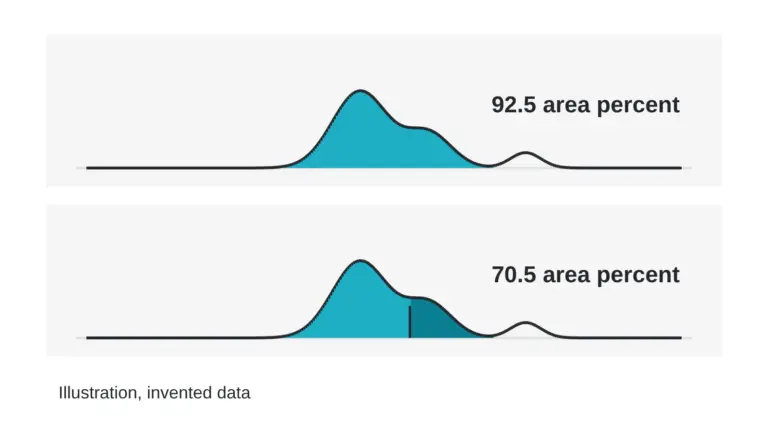
Read articleSame material, two purity numbers: why labs disagree
Two labs can report different area-percent purity for the same material. Learn how column, gradient, wavelength and integration change the number.
Read article
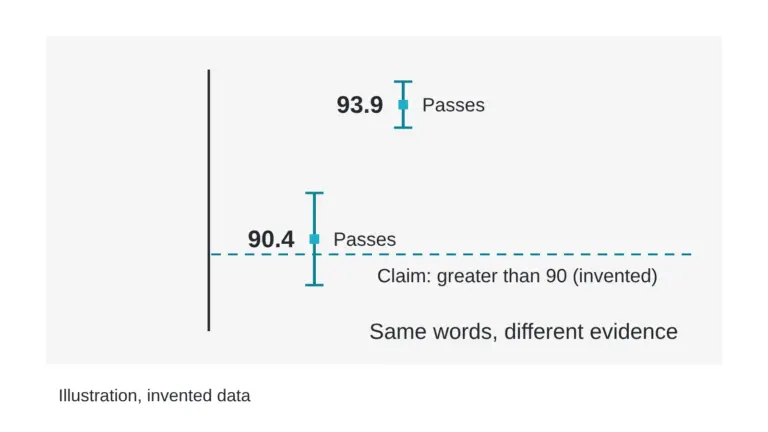
“Greater than” purity claims: a floor with no ceiling
A "greater than" claim gives you a floor and hides the ceiling. See what thresholds, reporting limits and measured values each tell you.
Read article“It looks fine” is not a test: what the eye cannot tell you about a dry sample
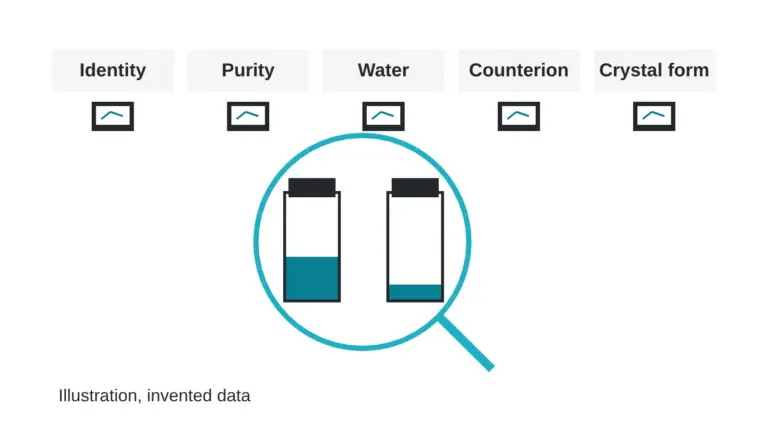
Color, cake height and shape tell you something. They say nothing about identity, purity, water or counterion share. See what the eye misses.
Read article“Purity (HPLC)” sounds final: five things the phrase leaves out
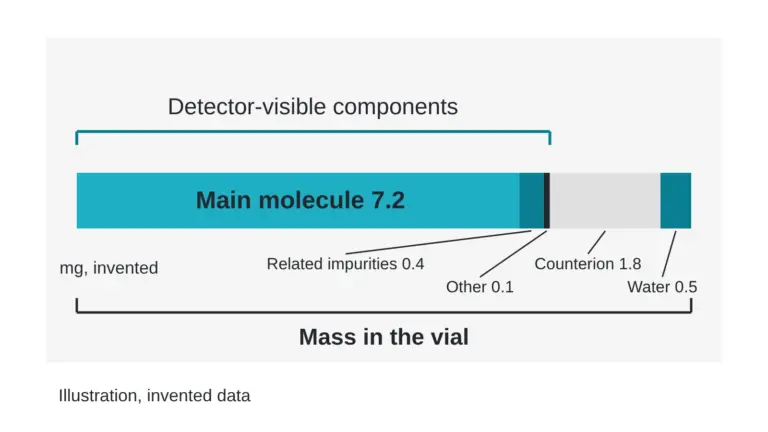
The phrase sounds final, yet it describes a detector signal and ignores the rest of the vial. See five gaps, with an invented milligram ledger.
Read article“Research grade” has no agreed definition. Here is what a useful grade statement would say
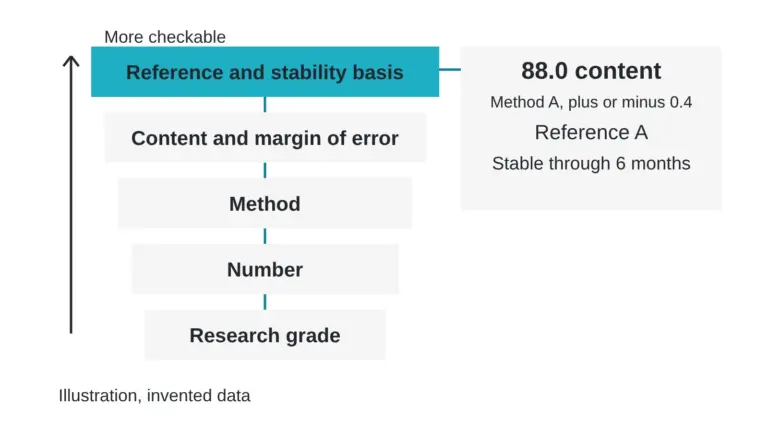
"Research grade" sounds like a standard and reads like a label. See what real grade systems for reference materials contain, and how to demand the same.
Read articleA “third-party tested” badge tells you less than you think. Here is what to check behind it
A "third-party tested" badge names who held the instrument. It leaves six questions open. Learn what to check behind the badge before you trust it.
Read articleBatch-to-batch variation is normal. Here is when it is a warning
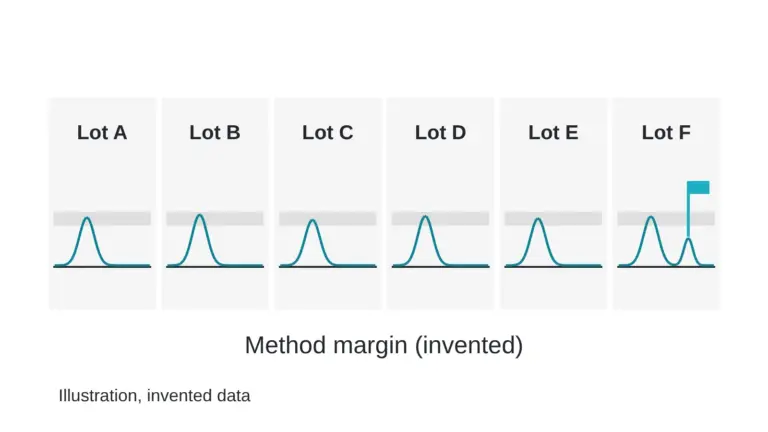
Two lots, two numbers, no alarm. Three tests separate ordinary batch variation from a difference worth a phone call to the laboratory.
Read articleFive ways a lab report can be accurate and still mislead you
Two labs print the same purity number, and both are telling the truth. Here are five ways an accurate report still leaves you with the wrong picture.
Read articleHow forged lab reports get caught: the checks a careful reader runs
A forged page can copy how a report looks. It cannot copy a laboratory's willingness to answer. Three layers of checks a careful reader runs.
Read articleOne number on a report should never end the conversation
One number on a report feels like an answer. Three reports with the same figure can hold three very different amounts of evidence. See how to tell.
Read articleOne test, many vials: what a single sample can and cannot say about a lot
A report describes the portion that was tested, and a lot is a much bigger claim. See how sampling and vial-to-vial spread decide what one test proves.
Read articleThree decimals, no extra truth: how to read the last digit on a lab report
One report prints three decimals and another prints one. Learn which digits are signal, which are noise, and how a margin sets the last honest digit.
Read articleTwo honest labs, one vial, two answers: when to shrug and when to worry
One vial, two reports, two different numbers, and nobody lying. Learn how to tell ordinary disagreement between laboratories from a real warning sign.
Read articleTwo purity numbers, one vial: why the lower one can be the stronger evidence
Two reports, one kind of material, and the smaller number came from the harder test. See why a bigger purity figure can be the weaker evidence.
Read articleWho checks the standard? The circularity problem in purity testing
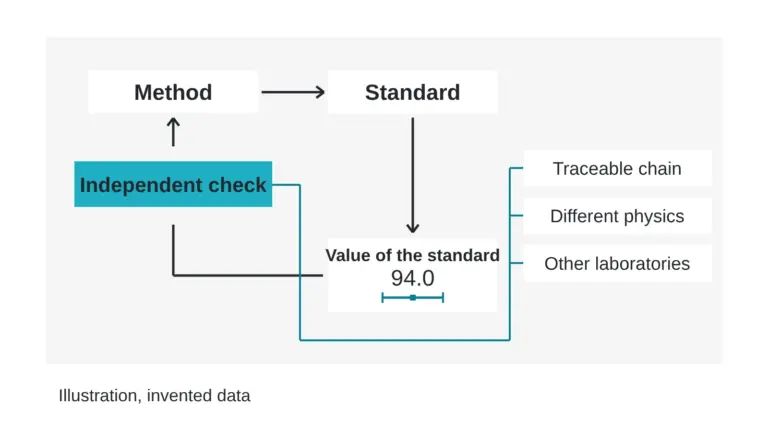
Every purity number is measured against a standard, and every standard was measured by something. Learn how chemists break the loop.
Read articleWhy colder is not always safer for dry solids
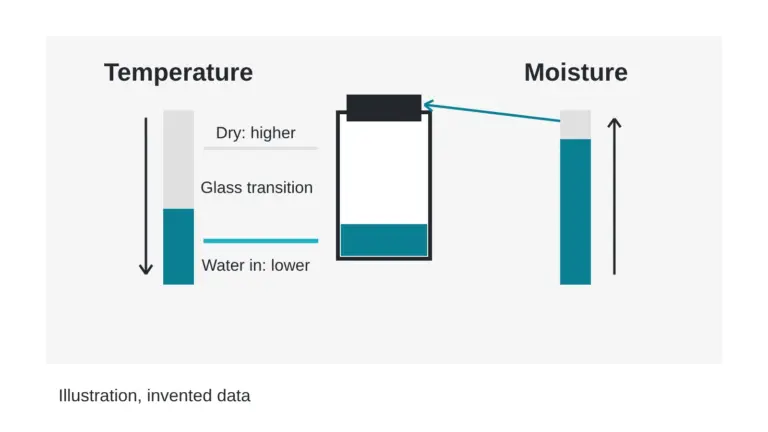
A freezer slows reactions. It cannot control how much water is already inside a dry solid or how much arrives at the door. See what cold protects.
Read articleWhy journals retract papers over missing raw data and chromatograms
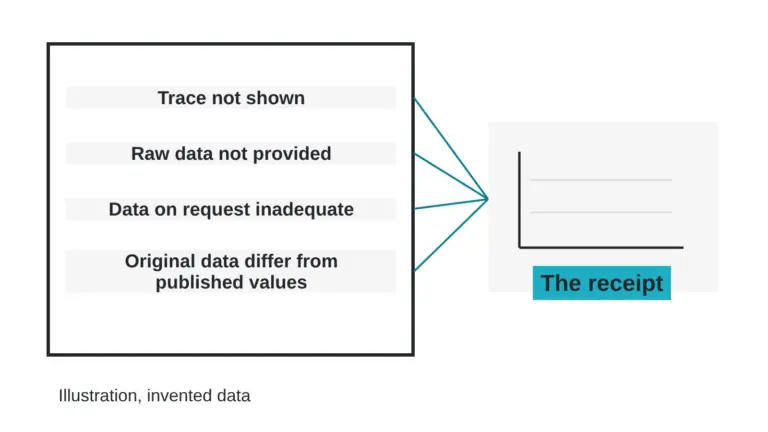
Editors cannot rerun an experiment, but they can ask for the trace. See what four retraction notices say when chromatograms and raw data go missing.
Read article
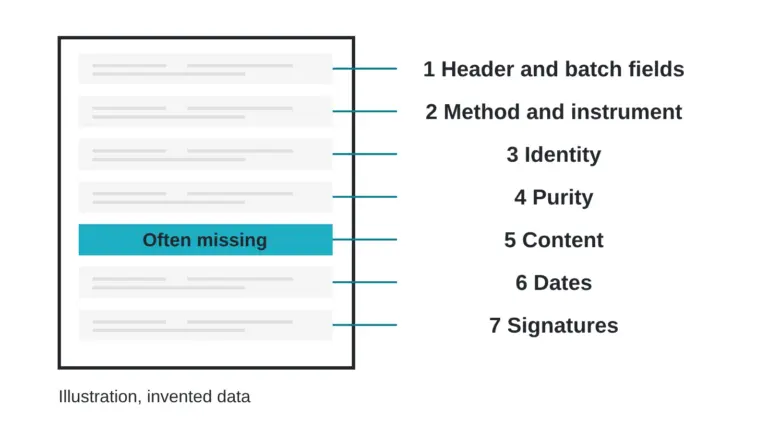
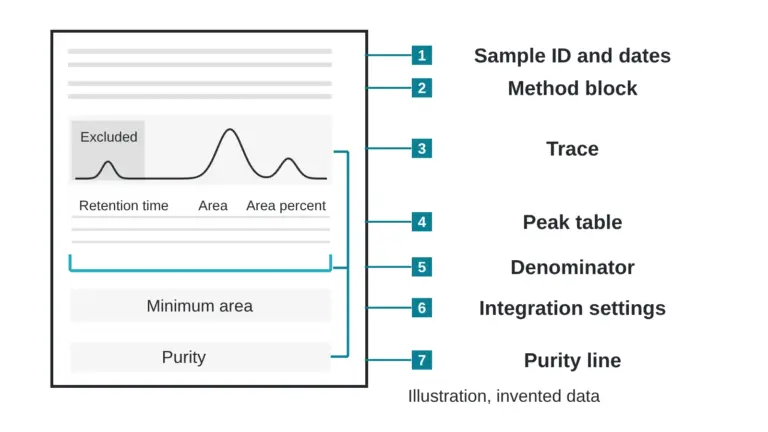
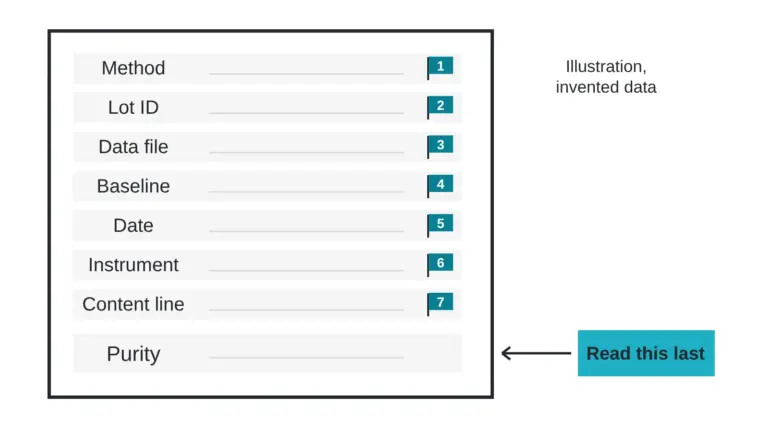
Anatomy of a chromatogram report page: every field, annotated
Eight fields on one report page decide what its purity line means. Walk through an invented page and learn which field to question first.
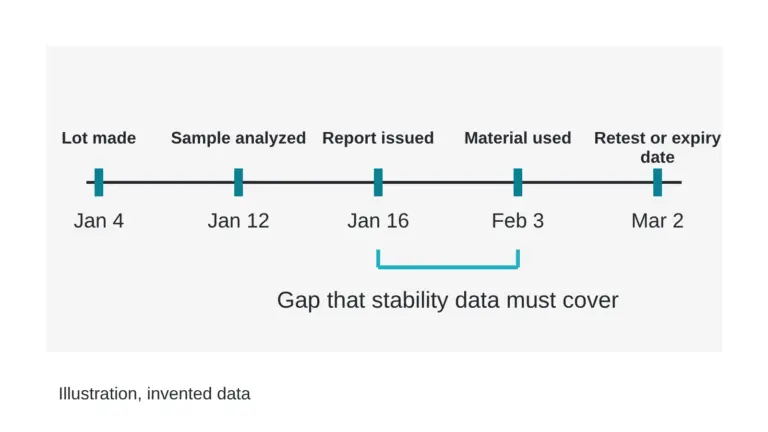
Read articleFive dates on a COA and what each one really means
A certificate of analysis can carry five different dates. Learn what each one records, what none of them prove, and how stability data bridges the gap.
Read articleIs that lab report real? Six checks that take minutes
A logo is free. A real lab report survives six checks: matching IDs, a direct question to the lab, raw files, simple arithmetic and a second opinion.
Read articleSeven red flags on a lab report (and none of them is the purity number)
Two reports can show the same purity figure and carry very different evidence. Seven gaps to look for, and the question to ask about each one.
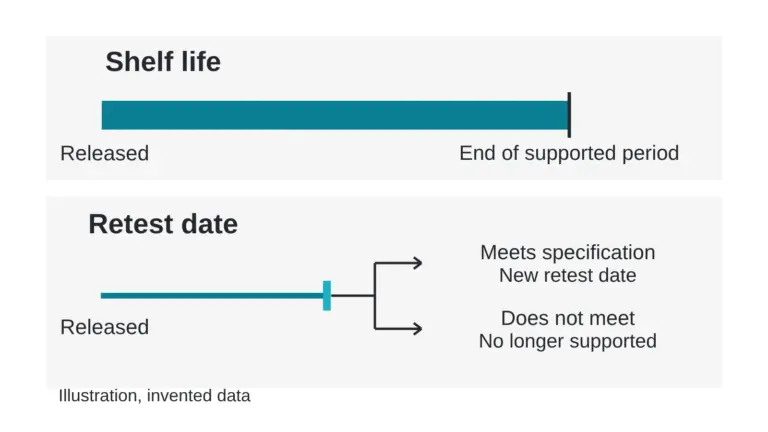
Read articleShelf life or retest date? One label promises, the other re-checks
One label promises a future. The other books an appointment to check. Learn what shelf life and retest date mean and what data backs each.
Read articleStop at the big number and you miss the report: how to read a COA
One big number sits on top of a certificate of analysis. The small print decides whether to trust it. Walk through an invented report line by line.
Read articleThe questions a good testing lab answers without flinching
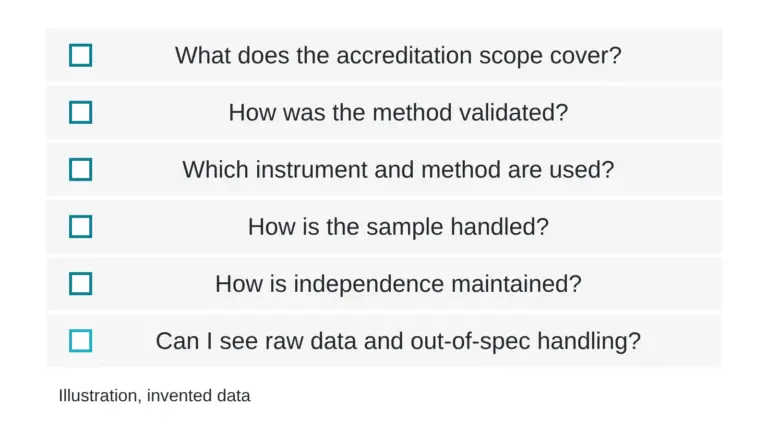
A reader's checklist for evaluating any testing laboratory: accreditation scope, method validation, instruments, sample handling, independence, raw data.
Read article
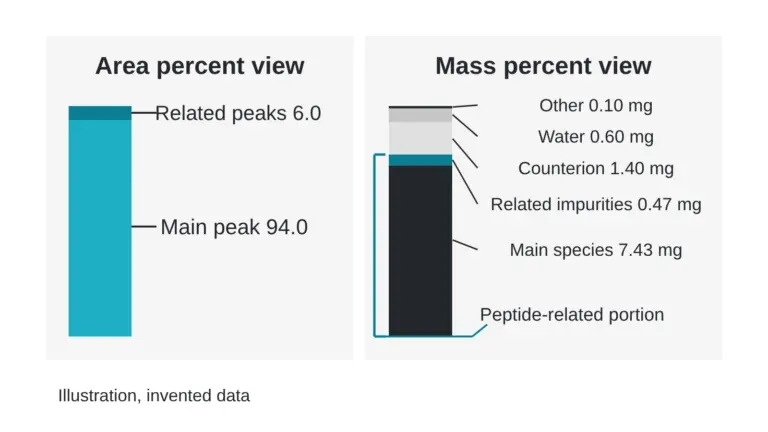
Area percent vs weight percent: the difference almost nobody explains
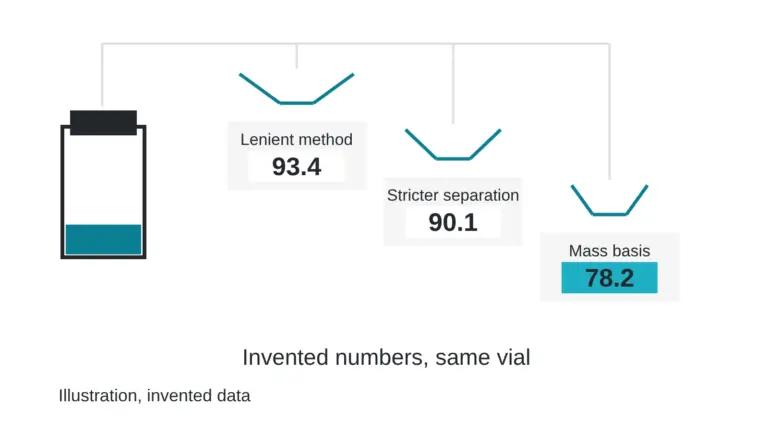
A vial can read 94.0 percent by area and still hold far less target by weight. See the difference with a worked example using invented numbers.
Read articleCHNS, liquid chromatography or LC-MS: which test answers which question?
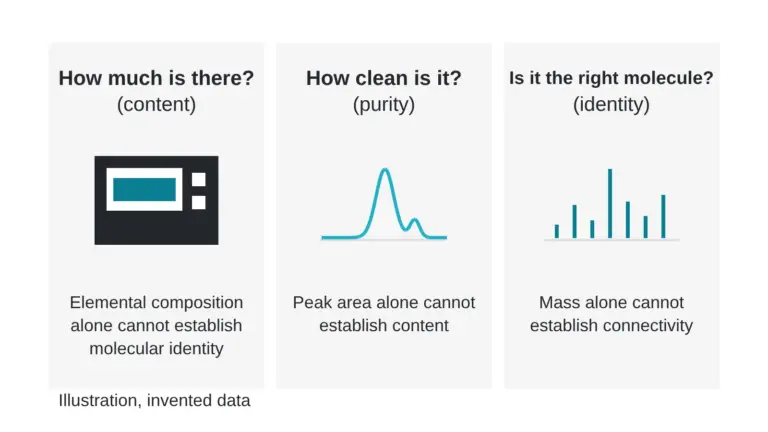
Elemental analysis, liquid chromatography and LC-MS measure different things. Match each method to the question it answers, with a worked example.
Read articleHow to read a chromatogram: what the peaks, shoulders and baseline say
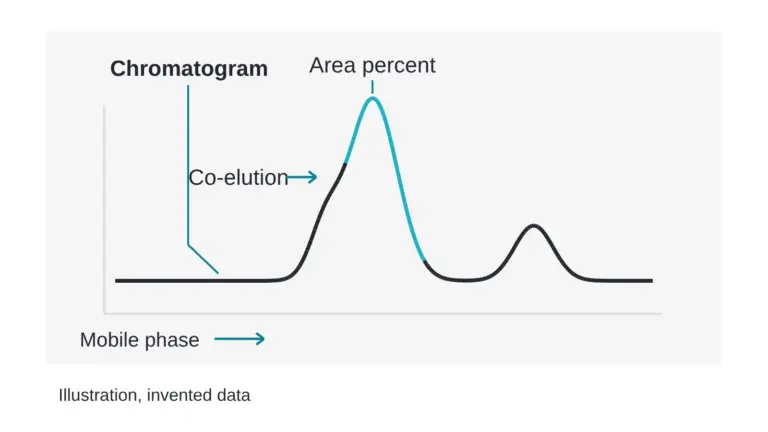
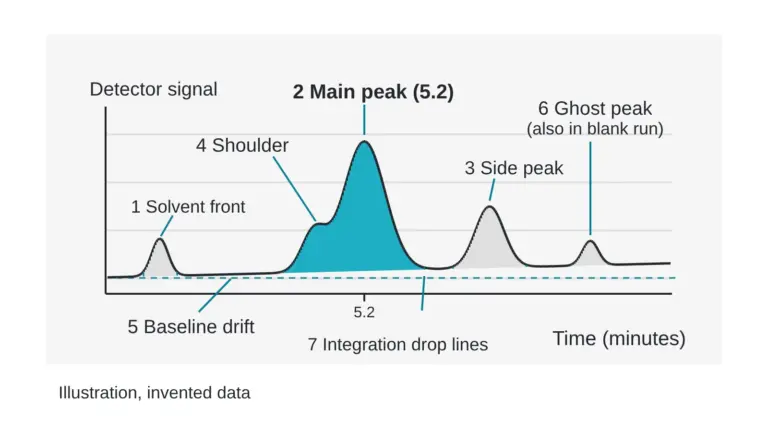
A peak is the headline and the baseline is the fine print. Learn to spot shoulders, drift and ghost peaks before trusting any purity number.
Read articleHPLC vs UHPLC: what actually changes on the bench
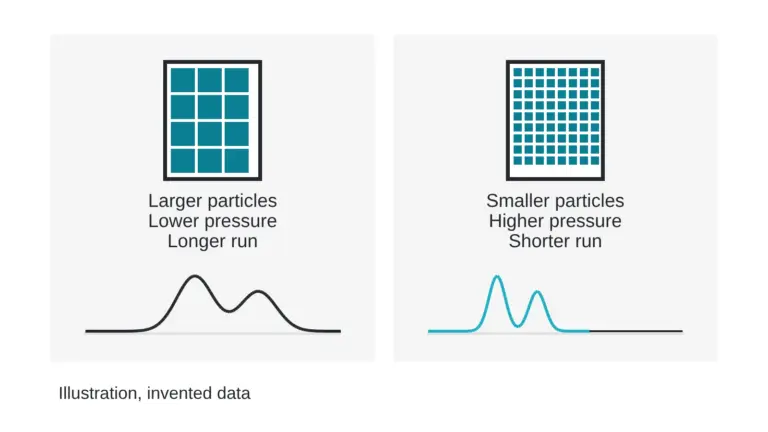
Same sample, same lot, two labs, two purity numbers. A faster column changes more than run time. See what changes, what stays, and why labs differ.
Read articleOne peak, two molecules: how co-elution hides what is in a sample
A clean, symmetric peak can still be two molecules wearing one coat. See three checks that catch co-elution and the pair each one misses.
Read articleSame material, two purity numbers: why labs disagree
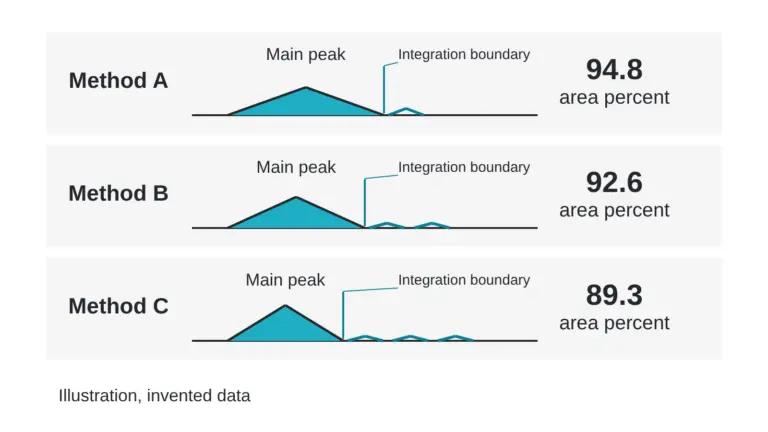
Two labs can report different area-percent purity for the same material. Learn how column, gradient, wavelength and integration change the number.
Read articleThe three instrument settings that can move a purity number
Same sample, three purity numbers, no mistakes. See how column, gradient and wavelength each move the figure, with an invented side-by-side table.
Read articleWhat a UHPLC purity number actually measures, and what it skips
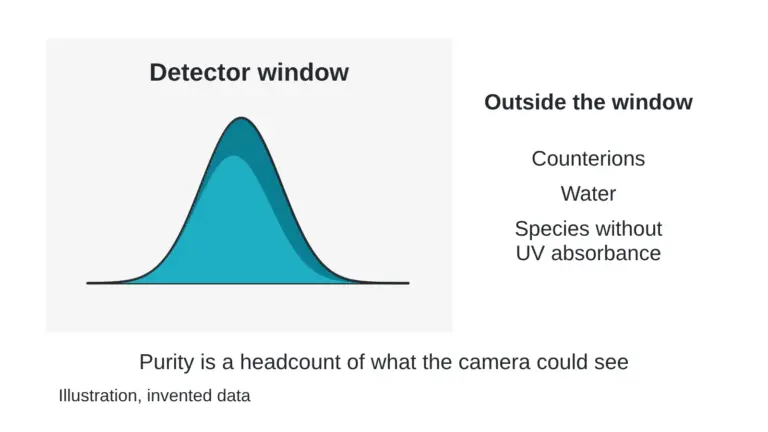
A purity percentage is a headcount of what one detector could see. Learn what UHPLC measures, what it misses, and the questions to ask next.
Read article
A matching molecular weight is not proof of identity. Here is why
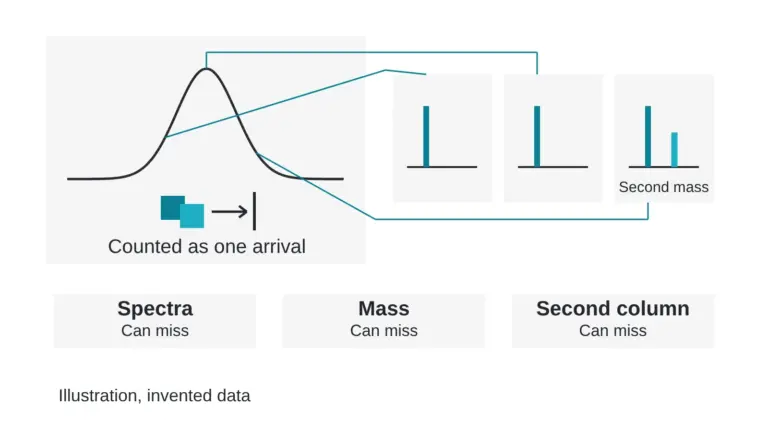
A report can say the measured weight matches and still describe the wrong molecule. See how same-mass look-alikes slip through and what catches them.
Read articleHow labs confirm what a molecule is: mass, fragments and structure
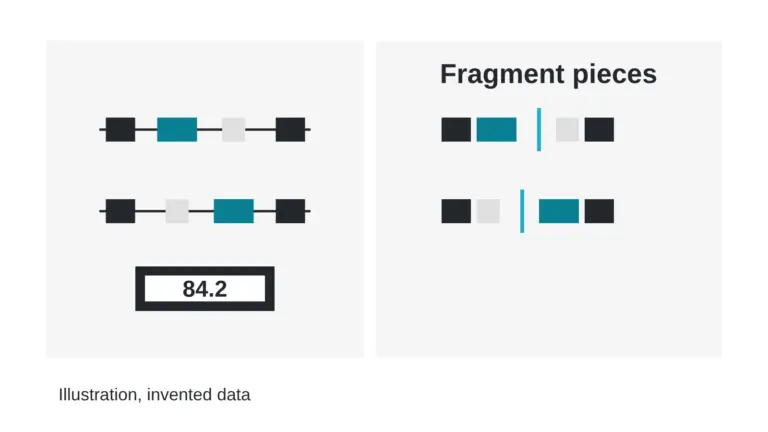
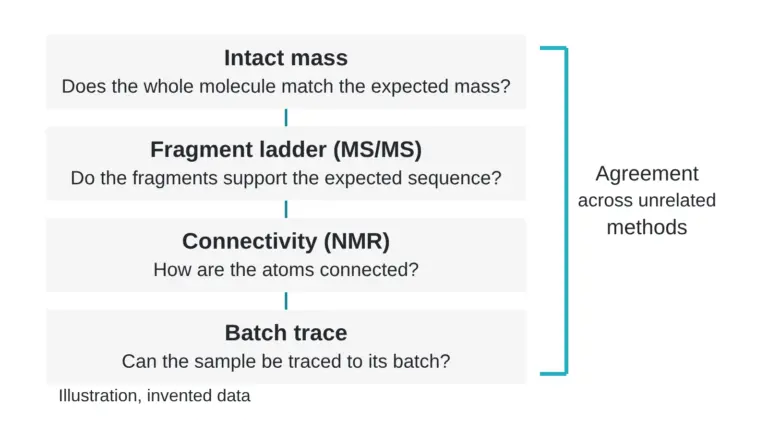
A clean chromatogram does not prove a sample is the intended molecule. See how mass, fragmentation and NMR combine to verify identity.
Read articleMass spectrometry for beginners: read a spectrum without a chemistry degree
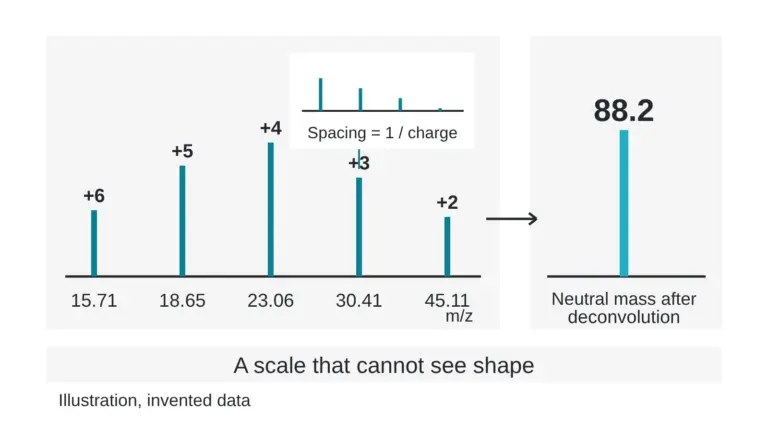
One molecule can draw five peaks on a mass spectrum. Learn charge states and m/z, and see what a matching mass proves and what it leaves open.
Read articleWhat NMR sees that mass spectrometry cannot
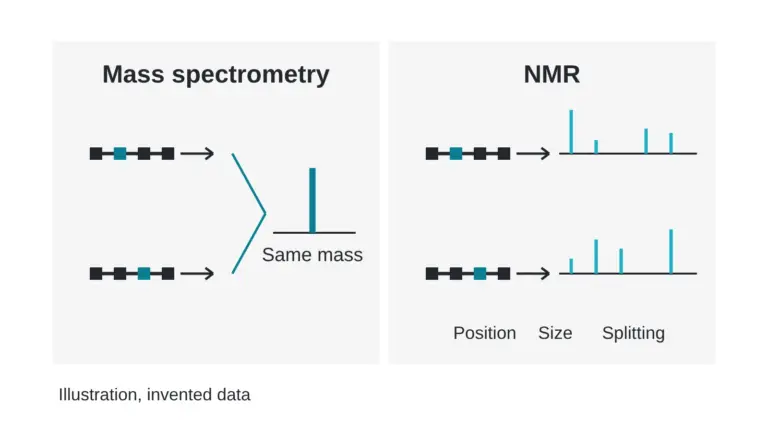
Two molecules can weigh exactly the same. See what NMR reads that mass spectrometry cannot, and where it runs out of road.
Read article
How a reference standard gets its number, and who checks the math
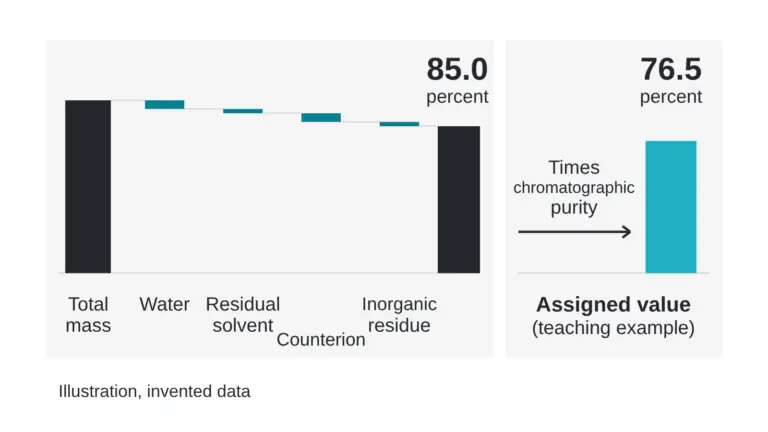
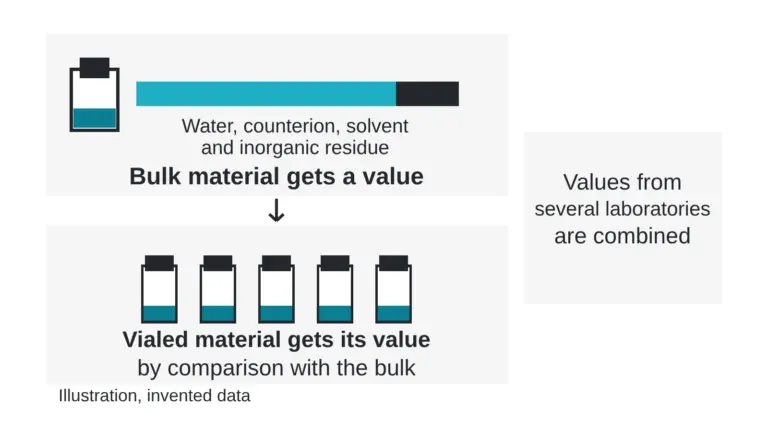
Learn how a reference standard gets its assigned value by mass balance: chromatographic purity adjusted for water, solvents, counterions and ash.
Read articleHow labs count what is in a vial: amino acid analysis explained
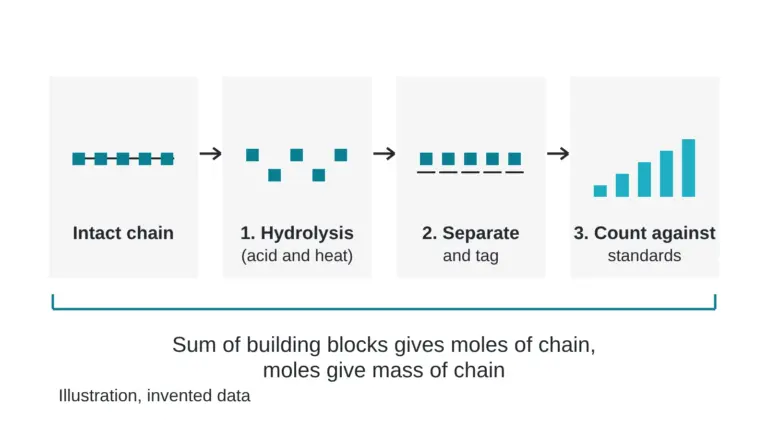
Amino acid analysis breaks a sample into building blocks to count them. See the three steps, why it gives content not purity, and where counts slip.
Read articleHow labs weigh the water in a dry sample: Karl Fischer explained
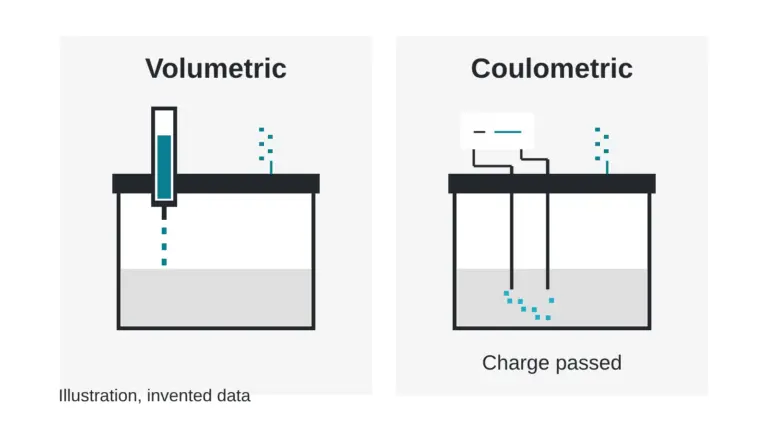
A balance cannot tell you how much of a dry powder is water. Learn how Karl Fischer titration counts it, and why one humid minute can skew the number.
Read articleThe question every buyer should ask: purity or content?
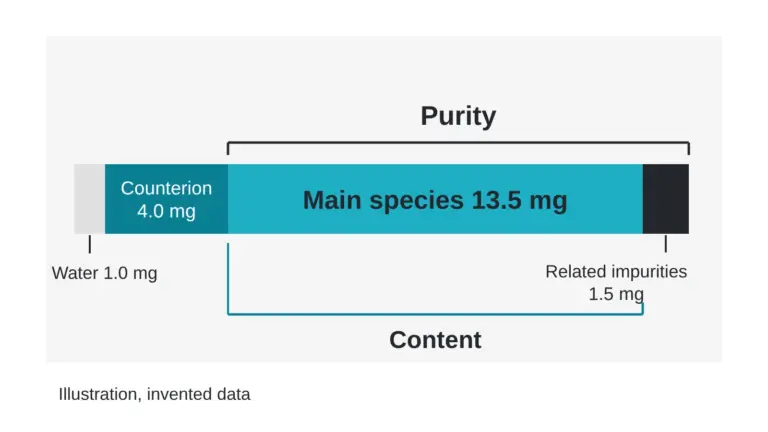
A vial can be clean and still hold less than you think. Two questions, one invented vial and the arithmetic that separates purity from content.
Read articleThe salt nobody lists: how a counterion changes what a vial really holds
A counterion balances the charge on a peptide, yet routine liquid chromatography and mass spectrometry do not detect it. See how content is measured.
Read articleThe small numbers that move a mass balance: residual solvents and ash
Two thin rows in a mass balance can shift a content figure. See how labs measure leftover solvents and ash, with an invented table.
Read articleWhy a 10 mg label can hold only 6.9 mg of the molecule: a worked example
Label mass times purity can overstate a vial by a third. Build net content line by line from an invented 10.0 mg powder.
Read article
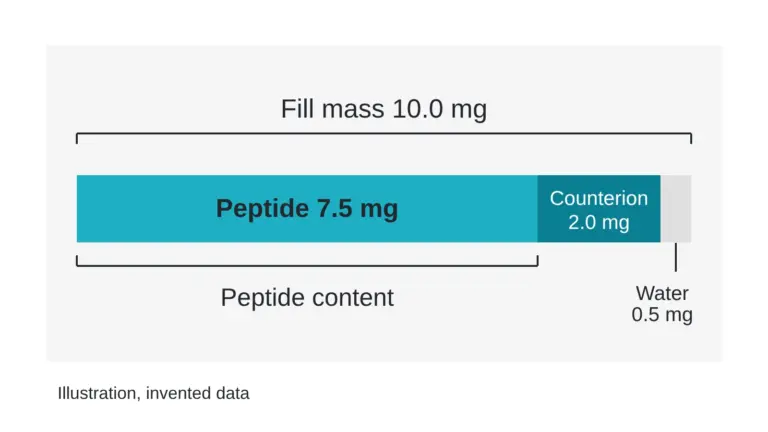
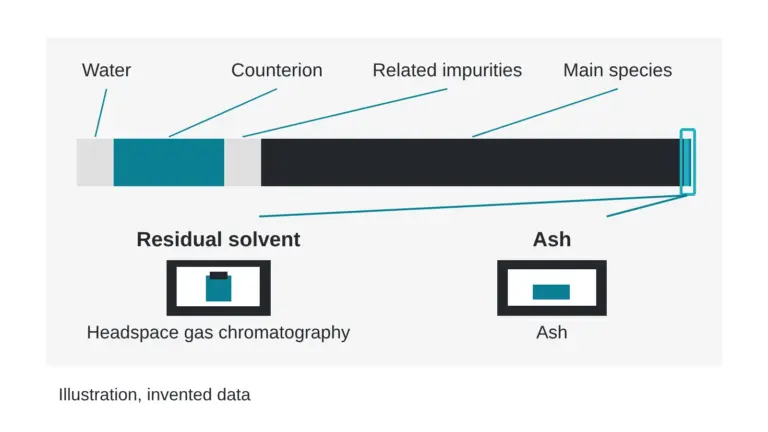
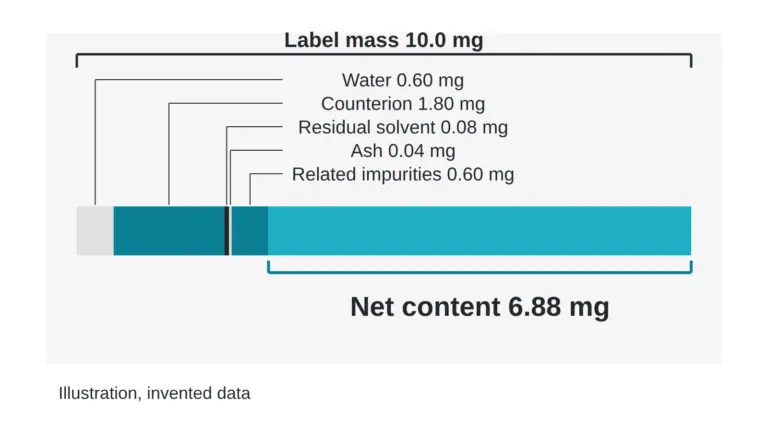
Do desiccants actually work? What they do, and what they cannot do
A packet in the box lowers the humidity of the air around a sample. See what a drying agent changes, what it leaves alone, and why drier is no guarantee.
Read articleInside a freeze-dried cake: what lyophilization leaves behind
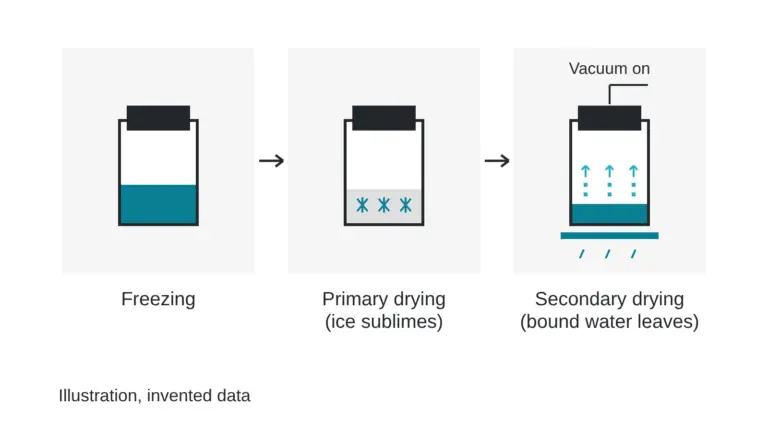
Lyophilization removes water by sublimation. Learn the three stages, why fragile molecules are freeze-dried, and what a lyophilized cake contains.
Read articleSame batch, different-looking vials: why dry samples vary
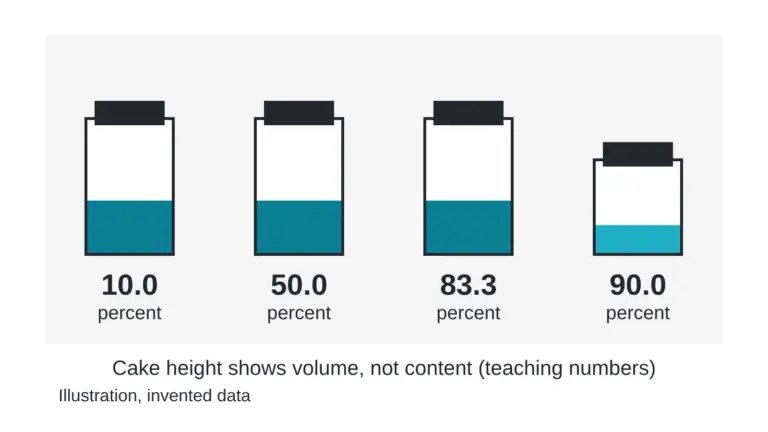
Two freeze-dried vials can look alike with different contents, or differ in looks with the same fill. See what shapes a cake and how content is set.
Read articleStoppers, seals and the small leaks that matter
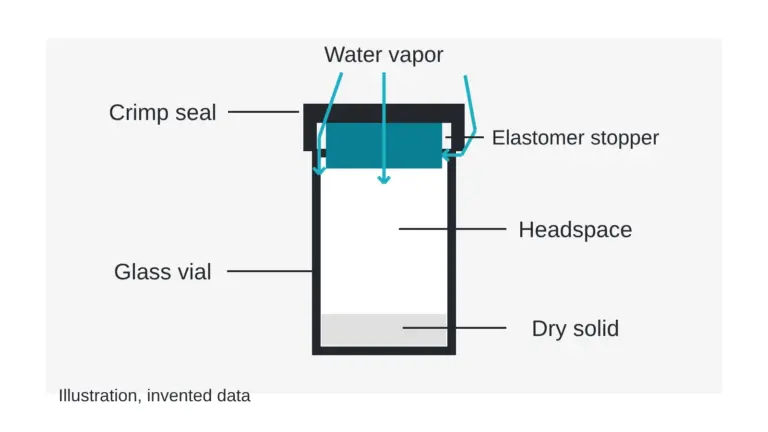
The vial looks perfect and the seal still leaks water vapor. Learn the parts of a closure, how moisture gets in, and what to inspect on a sealed vial.
Read articleStorage mistakes that quietly add water to a dry sample
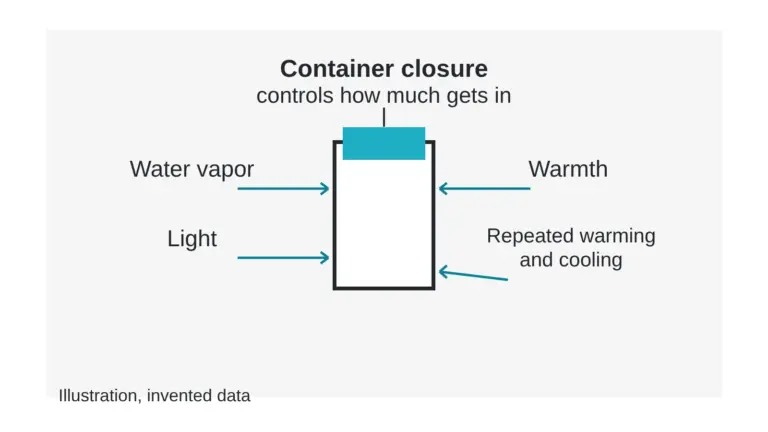
Why moisture, temperature, light and the container decide how well a dry research sample keeps, with a worked moisture example.
Read articleThe cold container trap: why condensation matters the moment a seal opens
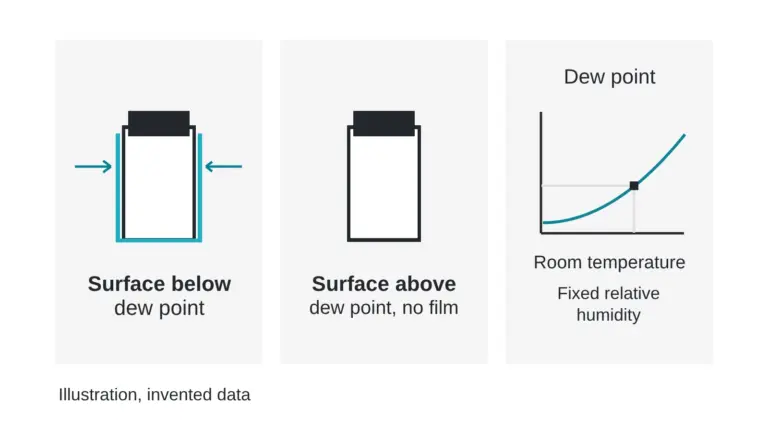
Why does a cold glass fog on a humid day, and why does the same physics matter to dry material? A plain explanation of dew point and equilibration.
Read articleThe variable nobody lists: how moisture moves a dry sample’s weight
A dry powder on a balance can gain weight while you watch. See how water shifts mass, stability and handling, and how labs measure it.
Read article
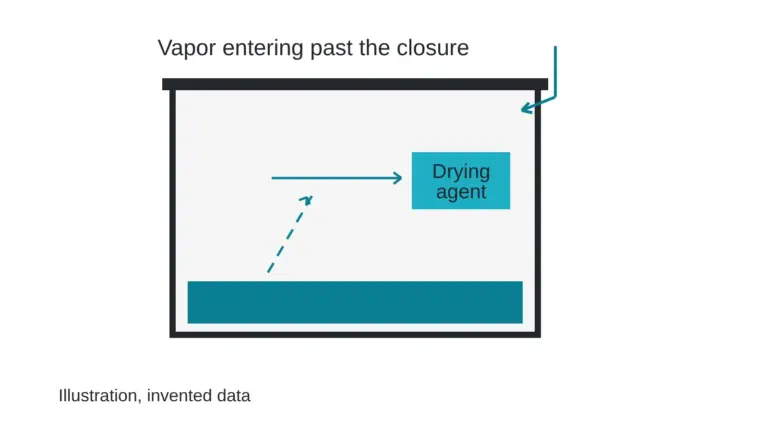
Independent testing: what independence proves and what it does not
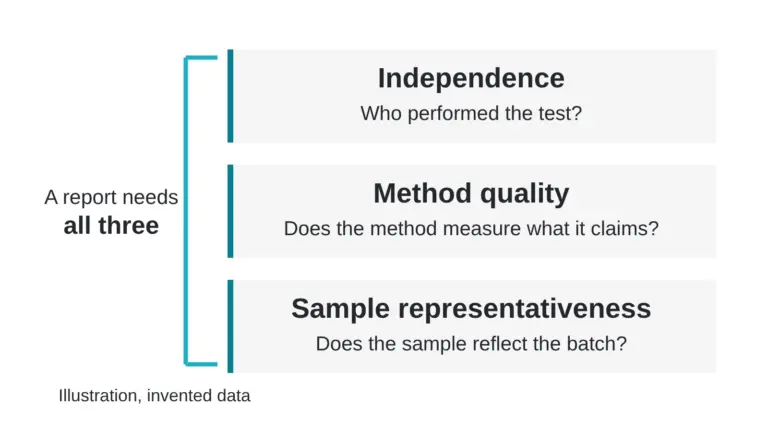
An independent lab is not automatically a correct one. See what independence settles, what it leaves open, and the questions that close the gap.
Read articleISO 17025: what the accreditation covers and what it leaves out
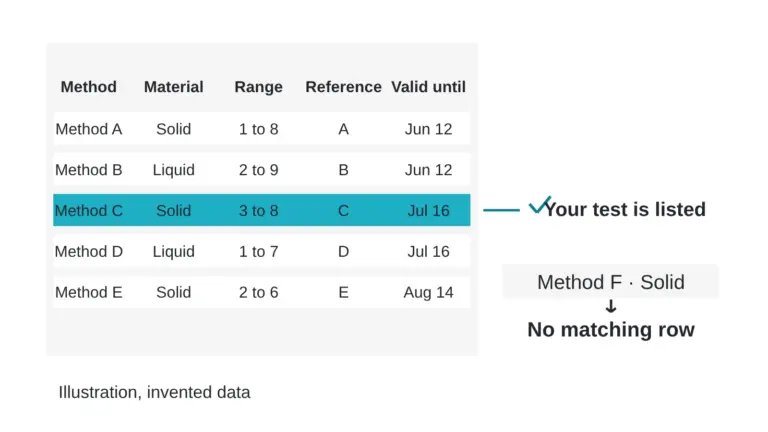
A logo on a report is not a guarantee for every test. See what ISO 17025 accreditation covers, what it leaves out, and how to read a scope document.
Read articleLabs grading labs: how proficiency testing keeps numbers honest
A laboratory can be careful and still be off by 10 percent without knowing it. See how proficiency testing finds the gap, and what a good score leaves out.
Read articleMethod validation in plain English: a number is only as good as its method
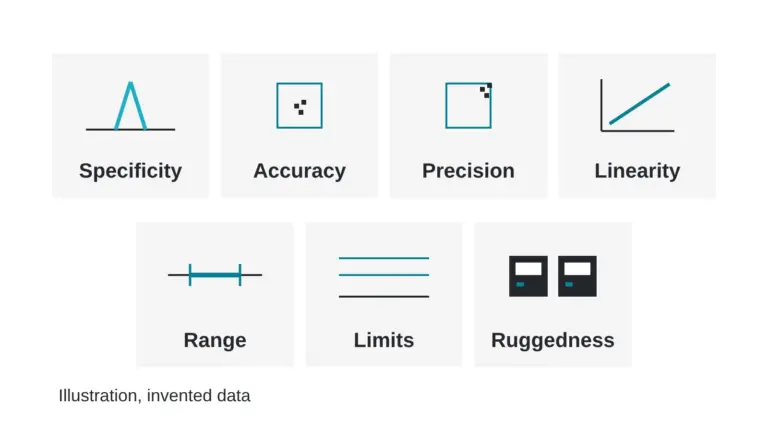
A report says the method is validated. Validated for what? Seven checks in plain words, with an invented table showing what each one looks like.
Read articleReference standards: the quiet argument behind every purity number
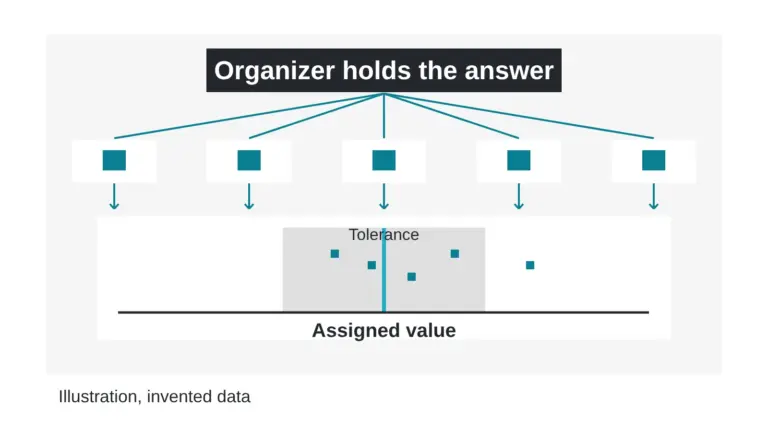
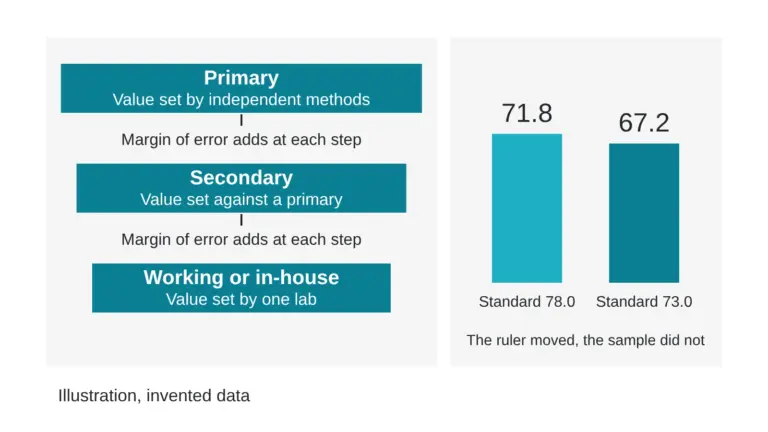
Every purity number is measured against something. See how primary and secondary standards differ and where traceability can break.
Read article
Journal club: how a two-step mass balance assigns a reference value
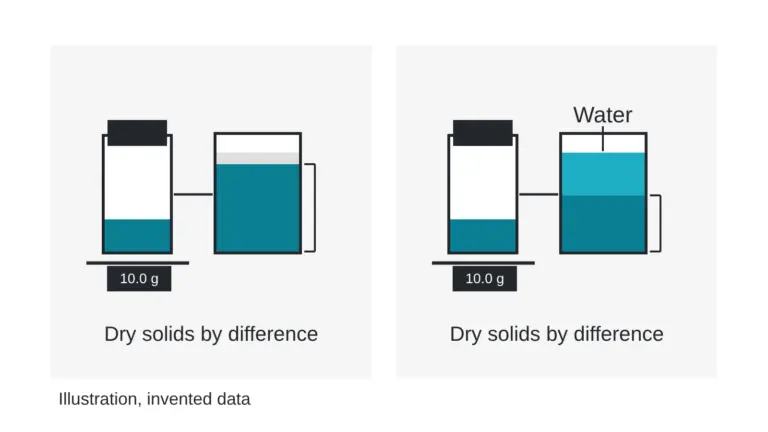
Every reference standard carries a number someone had to decide. A 2023 paper shows how two steps build it, and what the number cannot tell you.
Read articleJournal club: why counterion content matters, and how labs measure it
Counterion content is the shortest line on a lab report and one of the biggest. A 2012 paper tests which instruments can count it.
Read article
The testing glossary: 14 lab terms in plain English
Plain-English definitions of 14 analytical testing terms, from area percent and co-elution to mass balance and reference standard.
Read article